Our users rely on our software to run, so they can focus on managing their numbers and processes. In the rare instance performance is affected, we want to communicate this. By turning uncertainty into clarity, we strengthen user trust in our solutions.
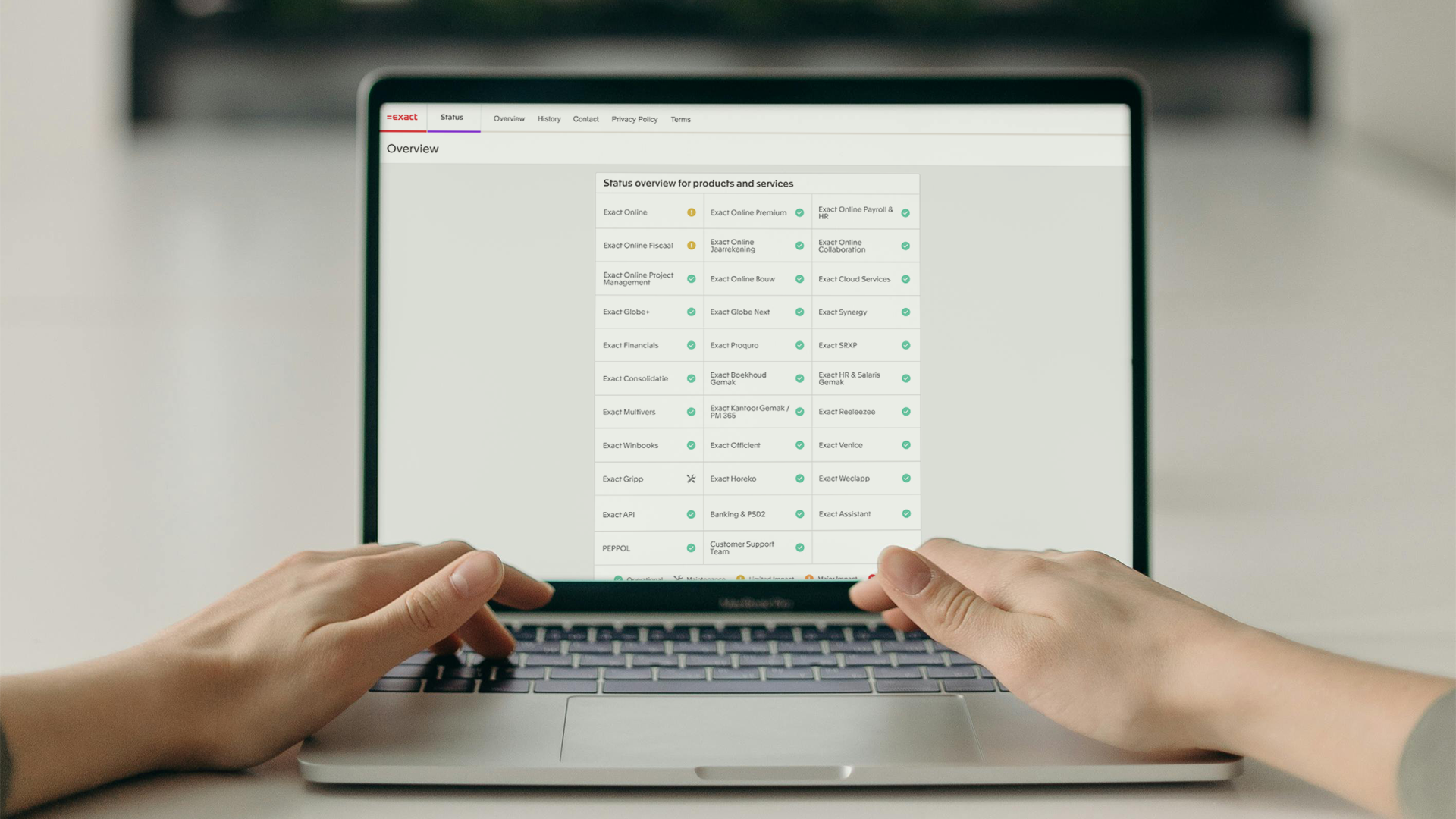
PROJECT
| CLIENT | Exact (Delft, The Netherlands) |
| REALIZATION | 2025 |
| ROLE | Service Designer |
| RESPONSIBILITIES | Customer Journey, Visual design, User testing, Concept, Feasibility, Project management |
CONTEXT
Business software that always works
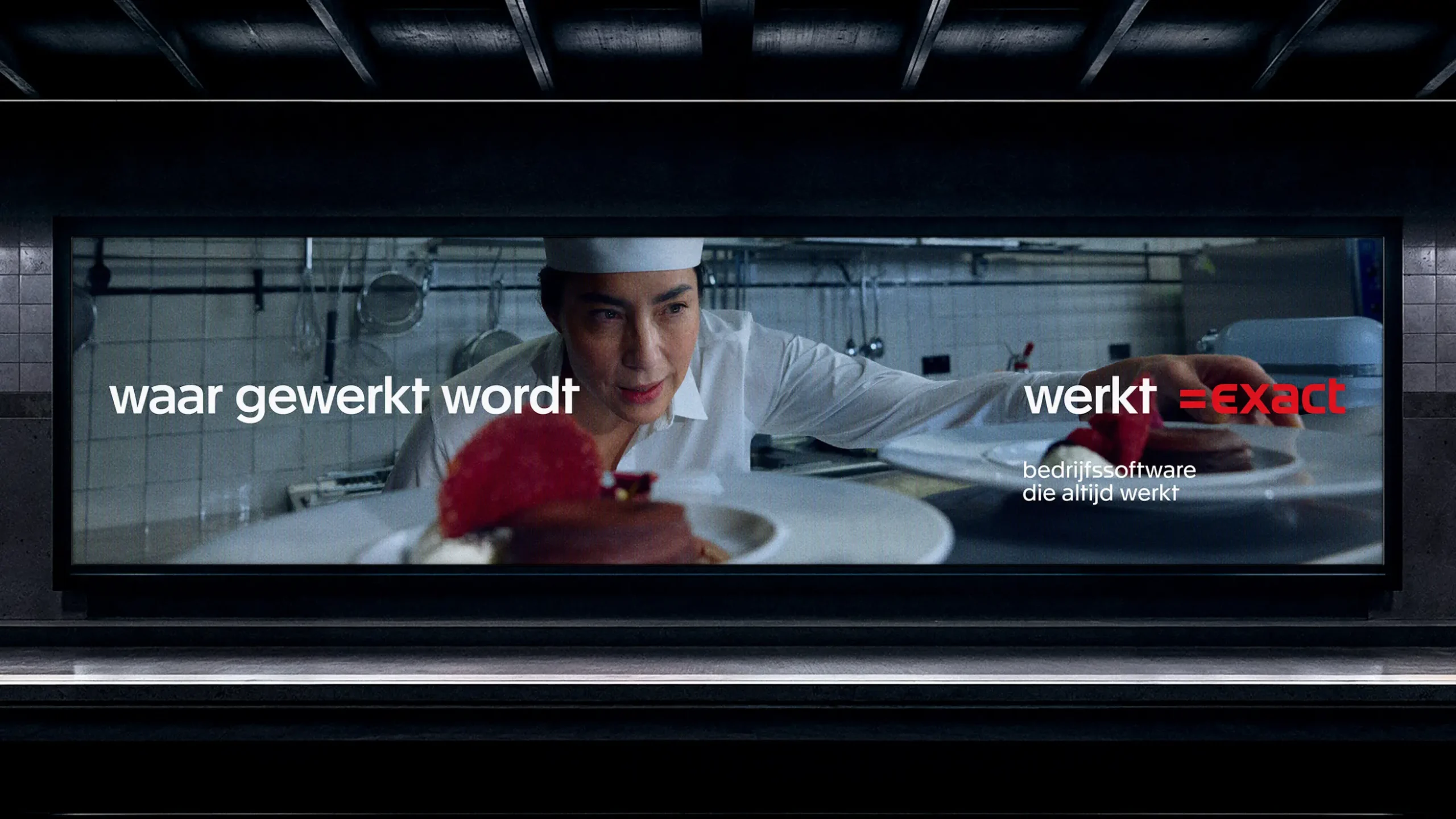
A new marketing campaign launched in the end of 2025: ‘Waar gewerkt wordt, werkt Exact’ (which loosely translates to where people are working, Exact runs). The subtitle translates to ‘business software that always works’. From kitchen to construction site, from office to warehouse: our business software is the solid foundation users can build on. With financial software as the beating heart and ERP software that connects and automates all their business processes. Essential tools in a world that never stands still.
As the service designer for horizontal journeys within Exact, I want to reflect the brand promise into a transparent status communication platform.
➔
A status page shows that we acknowledge unexpected problems openly and are actively working on them, which builds confidence and reduces frustration.
➔
It provides updates, ETAs, and workarounds so users can make informed decisions: whether to pause tasks or employ alternatives, and plan accordingly.
➔
Users can quickly check whether an issue is widespread or localized, reducing uncertainty and saving time compared to contacting support.
THE CHALLENGE
Proactive status reporting
The Statuspage project was about creating a single source of truth for system health and incident communication. Before this, customers were left guessing during outages, and support teams were overwhelmed with repetitive inquiries.
The goal: build transparency, reduce friction, and strengthen trust during critical moments. As businesses increasingly rely on digital tools to manage their operations, even brief service disruptions can have significant consequences. In the world of enterprise software, maintaining high availability and clear communication is essential for building and preserving customer trust.
A central place for Exact’s proactive status reporting, in a fast and reliable way
➔
No single source for updates: users relied on ad-hoc messages via support channels
➔
A large product portfolio (over 50 software packages, with even more additional services and connections)
➔
Users have no visibility into incident timelines, severity, or resolution progress
➔
Host on an external platform, independent from our tech stack to stay online even when our systems are down
DISCOVERY
Listening to others
To tackle this, I started by listening. I spoke with support agents who described the exhausting cycle of repeating the same updates with support tickets. I interviewed leads who admitted that even internally, information was scattered. The request from our users were clear: they wanted transparency, relevance predictability, and reassurance. Alerts were generated quickly, but translating them into customer-friendly updates was slow and inconsistent. Critical details like impact level or estimated resolution time were often missing, or phrased inconsistently. Also, it wasn’t really clear how it all worked together.
➔
Customers felt blind and frustrated during downtime
➔
Support teams were tasked with repetitive tickets
➔
Critical information existed in internal tools and tickets, but were not publicly announced
SOLUTION
Timely updates
The answer was a centralized, customer-facing statuspage designed for clarity and speed. The status overview reflects our company’s commitment to accountability and proactive communication, helping to manage expectations and foster long-term trust. The status page ensures that both internal teams and external users stay informed and aligned, even in the face of unexpected challenges.
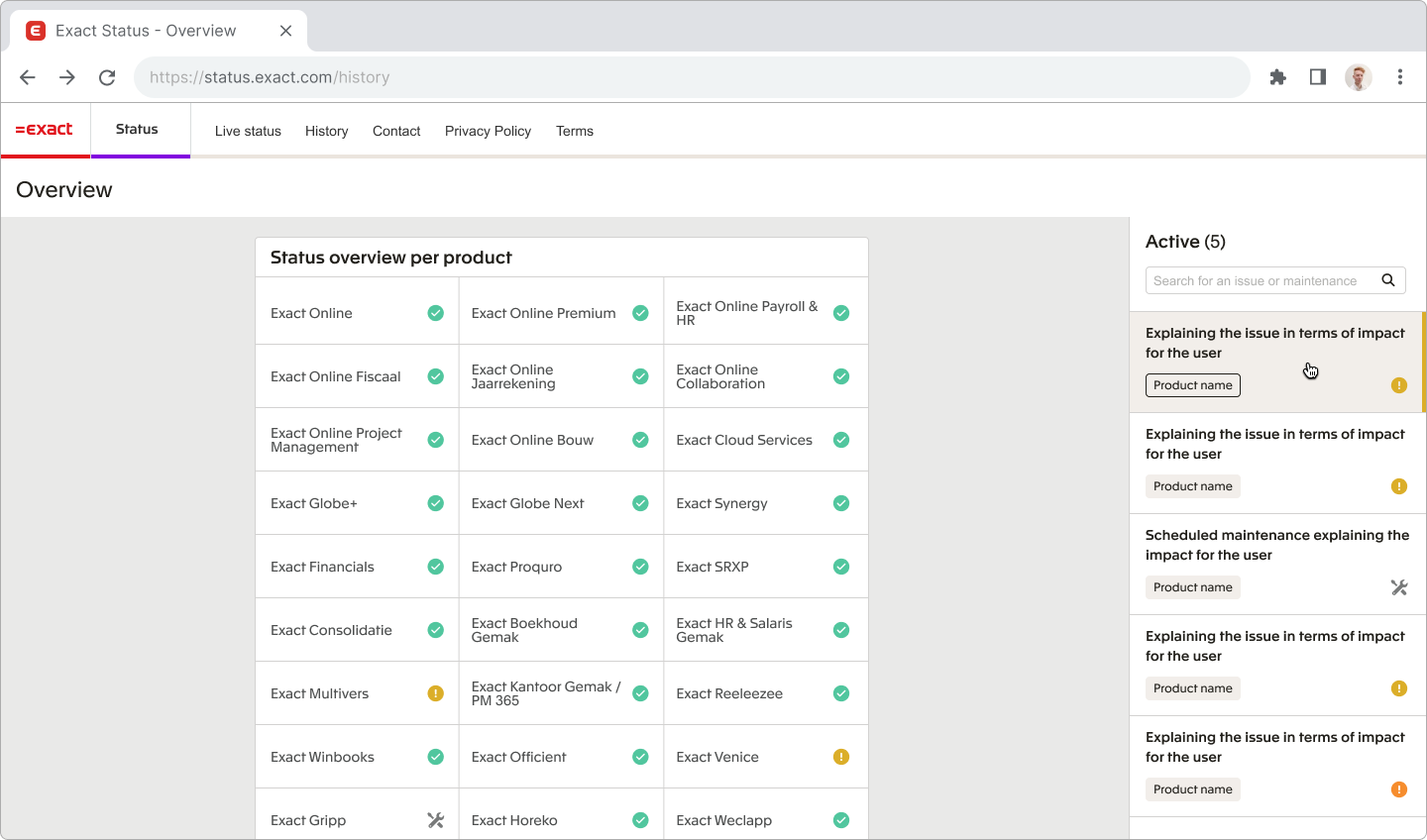
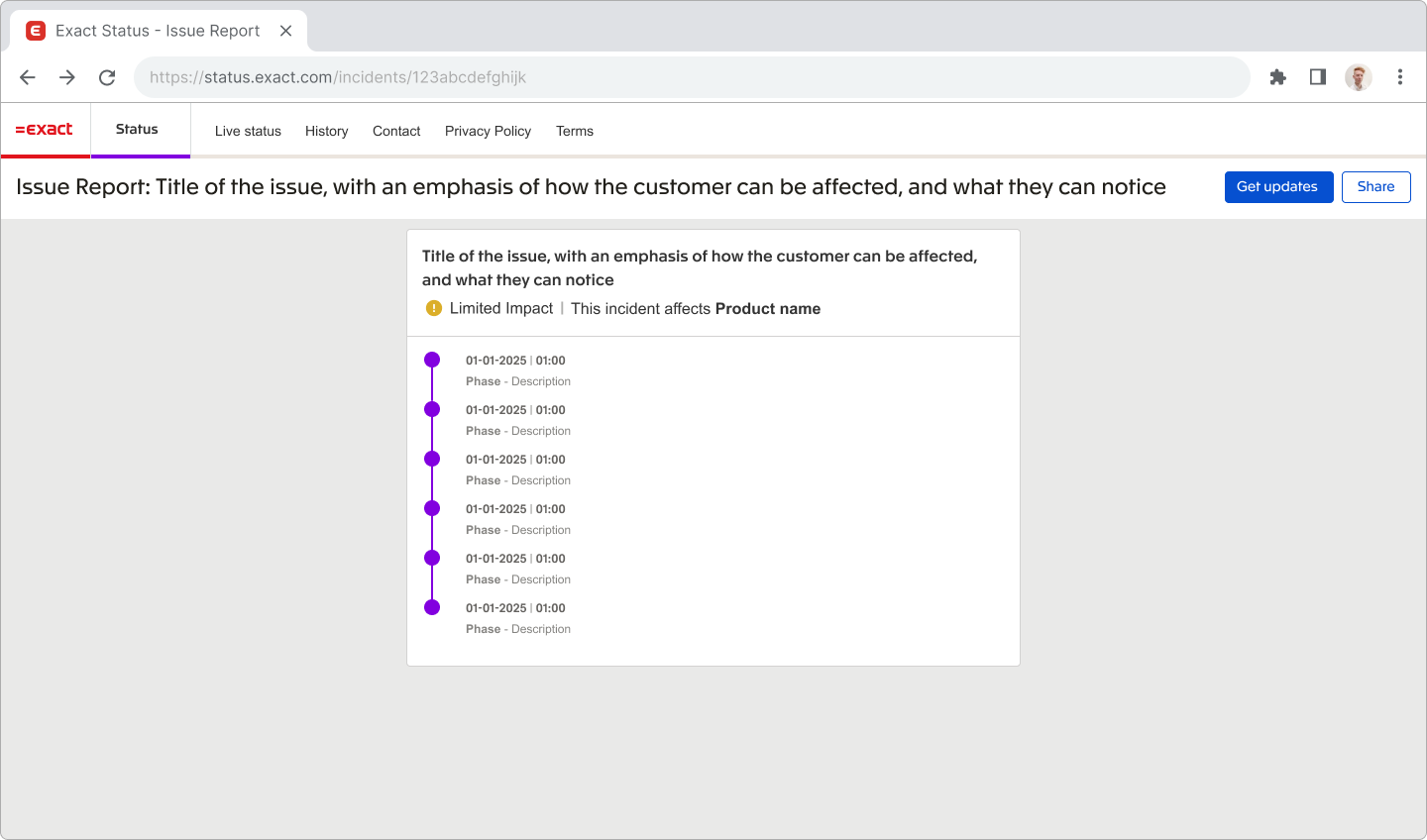
I created a clean, intuitive interface where users could instantly see system health, ongoing issues, and planned maintenance. Each issue follows a structured lifecycle (investigating, identifying cause, monitoring, resolved) so expectations are clear. We present this also in a timeline visualization.
We openly communicate all statuses and updates in a user-centric way at a central point
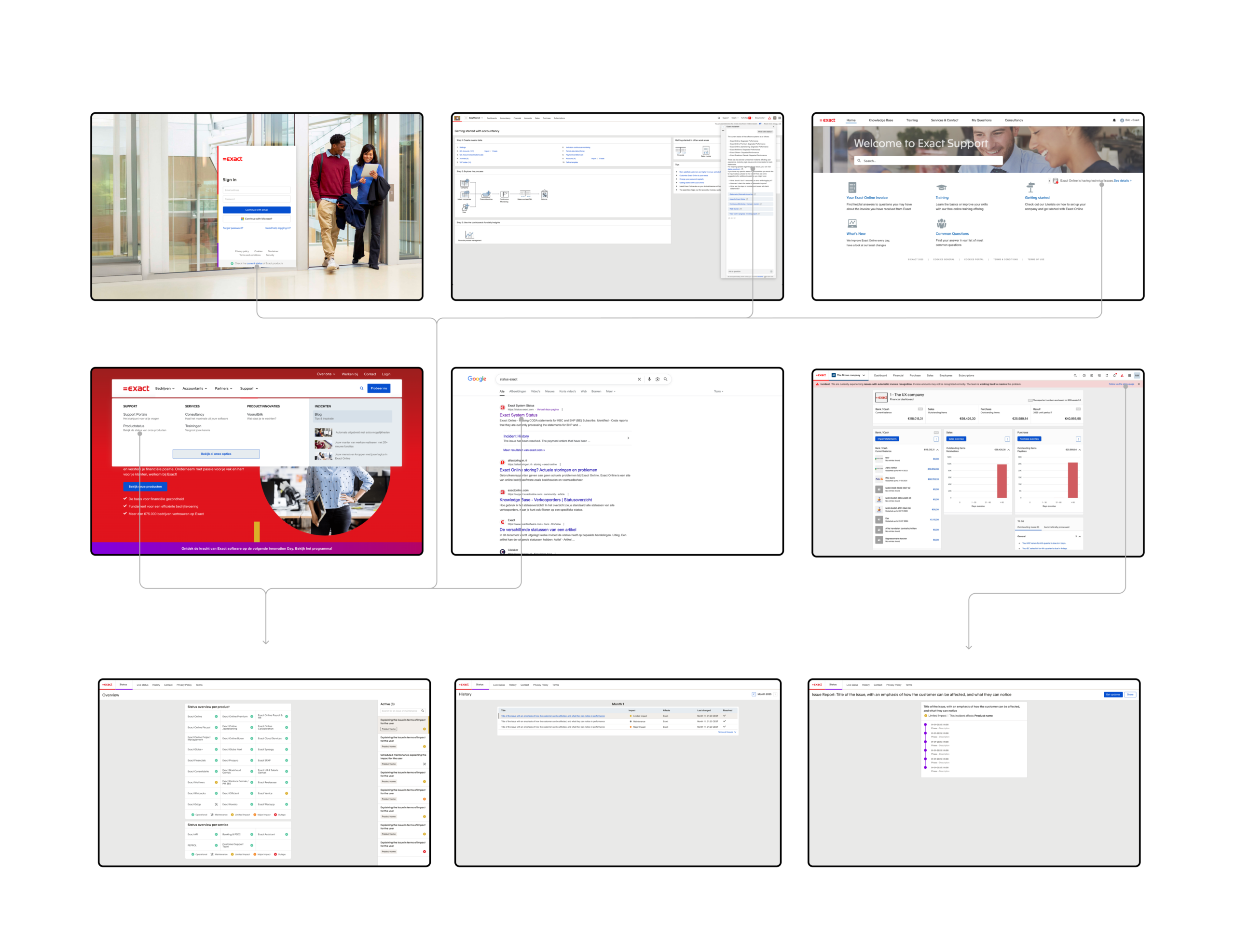
We integrated the process with existing monitoring systems and workflows. To make updates easy for internal teams, we built templates and use a CMS-like interface for publishing issues. We also integrated automated alerts from our monitoring tools, reducing manual effort and ensure updates went live within minutes. Finally, we added subscription options so customers can receive notifications via email or SMS, putting control in their hands.
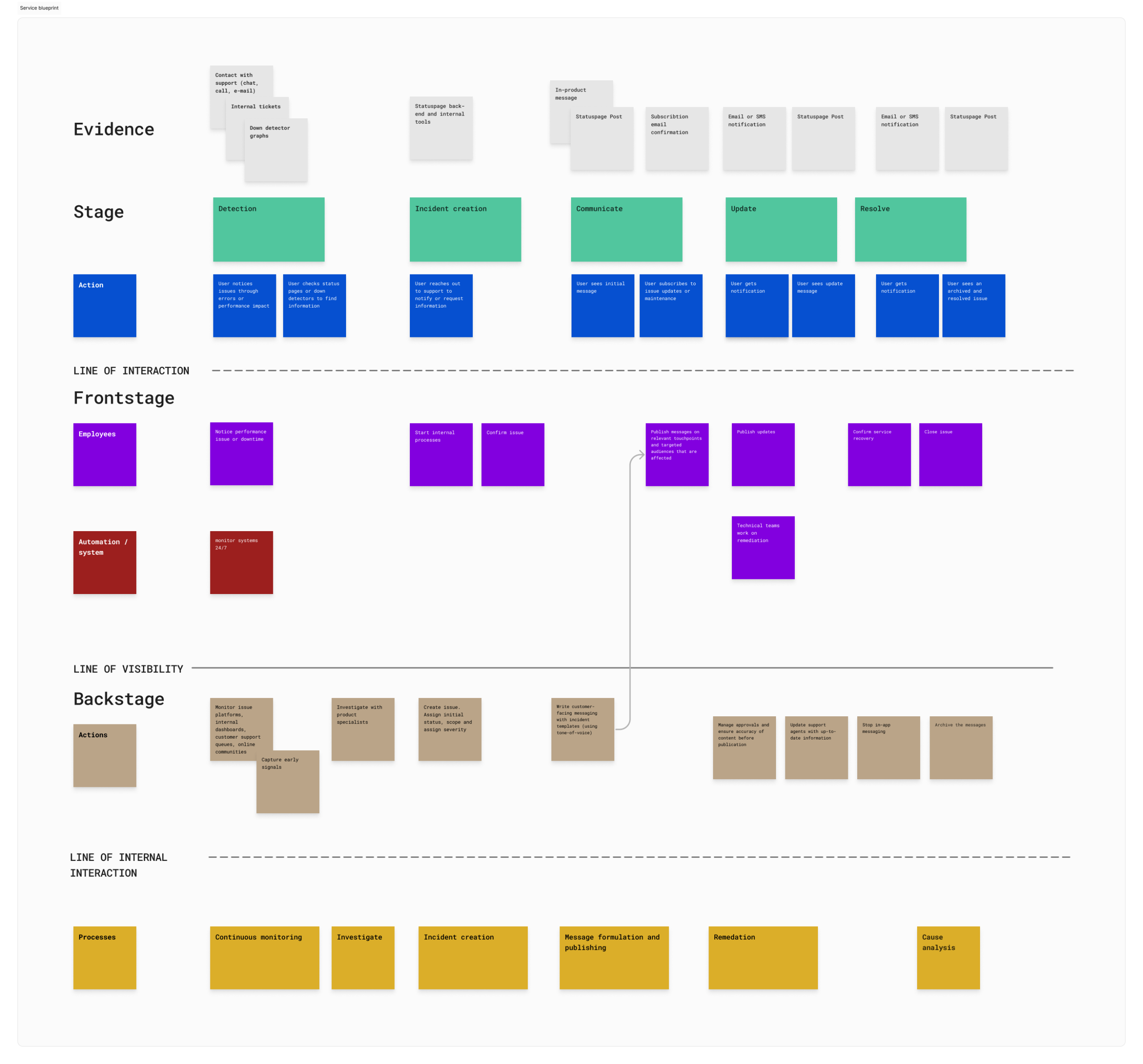
➔
We present the overview information first, then provide deeper insights into the issues
➔
We show only the active issues of our software on the overview
➔
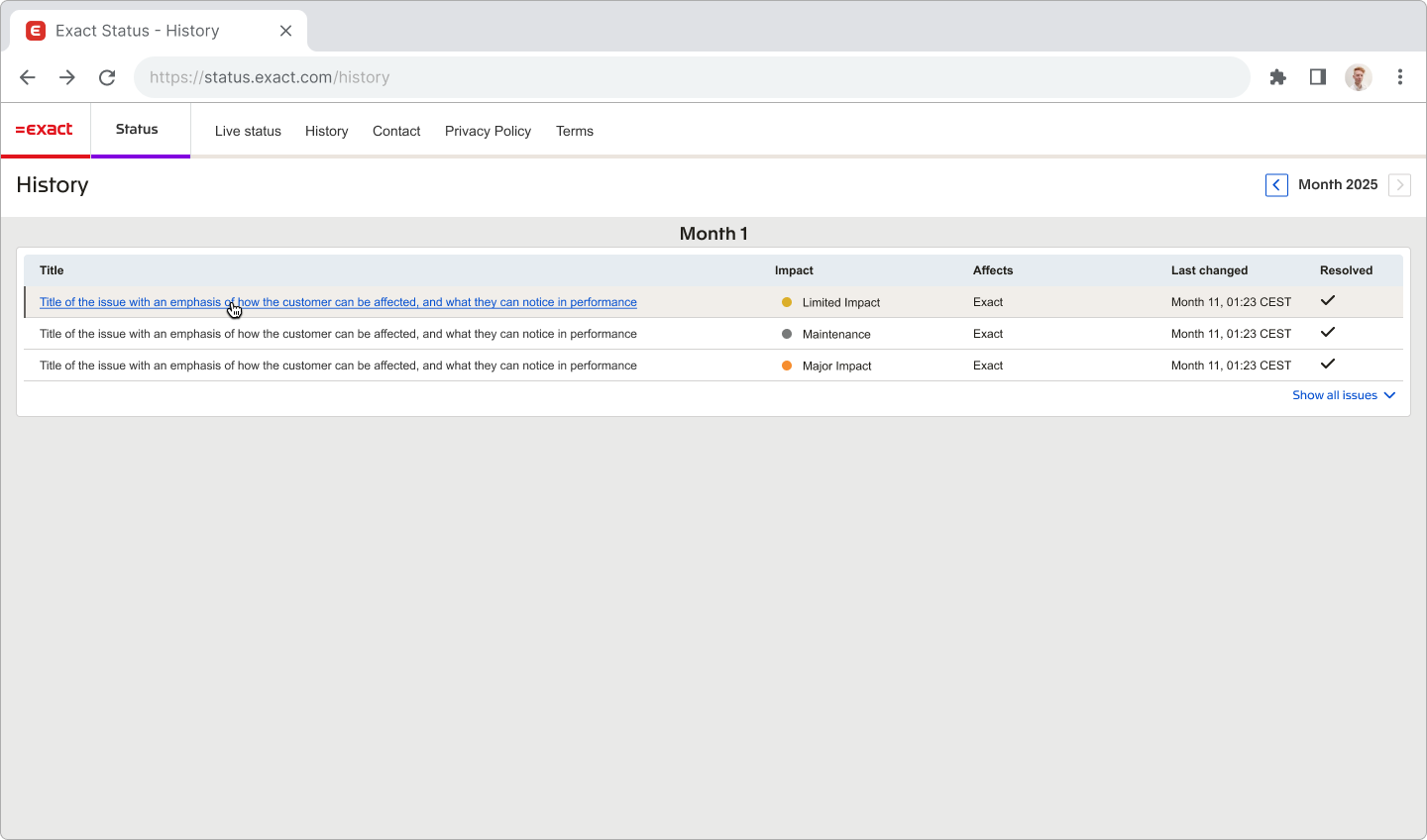
We provide a transparent overview of historic issues for future referral and troubleshooting
➔
There is a visual connection and brand recognition by using the Exact Design System visual language
IMPACT
The source of truth for software performance
The status page plays a crucial role in this context by offering a transparent, real-time view of system health, scheduled maintenance, and incident updates
➔
Delivers timely information, reducing uncertainty and minimizing the need for direct support inquiries during outages or performance issues
➔
One incident announcement and update system to reduce manual effort
➔
The status page ensures that both internal teams and external users stay informed and aligned
➔
The messaging is phrased from a user perspective and always focuses on the impact on the usage